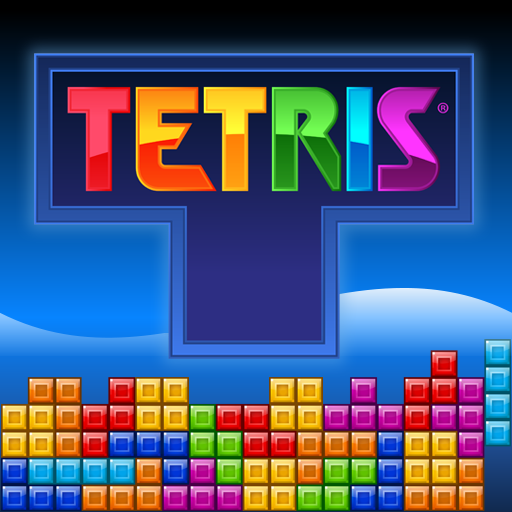
What Is Tetris?
Tetris is one of the most famous and most-played games in history. Created by Soviet software engineer Alexey Pajitnov in 1984, it has shipped on virtually every gaming platform ever made — and now plays beautifully in your browser for free. The concept: geometric shapes called tetrominoes fall from the top of the screen. Arrange them to form complete horizontal lines, which then vanish and score points. The game ends when the stack reaches the top.
How to Play Tetris
Seven tetrominoes cycle into play: the I-piece (four in a row), O-piece (2×2 square), T-piece, S-piece, Z-piece, L-piece, and J-piece. You move them left and right, rotate them, and can soft-drop (hold down to fall faster) or hard-drop (instant fall to bottom). Complete lines disappear and your score increases; the more lines you clear simultaneously, the bigger the bonus. Clearing four lines at once with an I-piece is called a "Tetris" — the maximum single-play score.
Controls
- Left / Right Arrow — move piece horizontally
- Up Arrow — rotate piece clockwise
- Down Arrow — soft-drop (speed up fall)
- Spacebar — hard-drop (instant place)
- C (or Shift) — hold current piece for later
Beginner Strategy
Keep the stack flat. Never let one column get significantly higher than the others. A flat surface is the easiest to place pieces on cleanly.
Save the I-piece for a Tetris. Keep a vertical well (one-column gap) on one side of the board and save I-pieces to drop in and clear four rows at once. This is the most efficient way to score and manage board height.
Use the hold queue. If a difficult piece arrives at a bad time, hold it and use the next piece instead. This lets you manage the most disruptive shapes (usually S and Z) more effectively.
Don't rush rotations. Plan your rotation and destination before the piece enters play. Most Tetris variants show you the next three to five pieces — use that preview time to plan.
Why Tetris Endures
Tetris has been studied by cognitive scientists for its effects on spatial reasoning, stress relief, and even PTSD symptoms. Its design is mathematically perfect: the seven tetrominoes are precisely the set of shapes that create both order and chaos. Playing it in a browser preserves everything that made the original great. Simple rules, infinite depth, and a score you always want to beat.
The Tetris Method
The "Tetris Method" is a high-level stacking strategy developed by competitive players. Rather than building rows, you keep a tall column on one side and rapidly fill the other three columns with the goal of clearing four rows at once using a vertical I-piece. This approach maximises score while keeping the board flat.
The setup is delicate: any mis-dropped piece can disrupt the pattern. Veteran players rehearse the rhythm until the muscle memory is automatic.
Versus Tetris Theory
In versus modes (Tetris 99, Tetris Effect multiplayer), the "garbage attack" mechanic rewards four-line clears. The more lines you clear simultaneously, the more garbage you send to opponents. The optimal strategy is high-risk: chase Tetrises at all costs, even if it means stacking high.
FAQ
- Q: How fast does the level increase?
- A: Each level speeds up gravity by approximately 15%. Around level 20 the drop is uncomfortably fast.
- Q: What's the highest score possible?
- A: Theoretically unlimited; the world record exceeds 10 million in marathon mode.
- Q: Can I undo a move?
- A: No undoes in standard Tetris rules. Some training modes support undo for practice.
- Q: Are there different starting speeds?
- A: Yes — most modern Tetris versions let you choose starting level and lock delay.
 Pac-Man 30th Anniversary
 Smash Karts
 2048 Italian Brainrot
 Arcade Tennis